

What Does Glutathione Do? Benefits, Uses, and What to Expect from Glutathione Injections
Glutathione is your body's master antioxidant, but what does it actually do? An evidence-measured look at its role, why levels drop, and how IV, injections and oral supplements compare.
Glutathione appears on almost every IV drip menu, usually introduced as the body's master antioxidant. That is not marketing invention. Glutathione genuinely is one of the most important molecules your cells produce, studied for decades in liver injury, aging and oxidative stress. What is far less settled is whether adding more of it from the outside, through a drip or a shot, delivers the specific results people hope for.
This article answers the question directly: what glutathione does, why levels fall, how the delivery routes compare, and what happens at an appointment. It also draws a clear line between what research supports and what it does not, because on this molecule that line matters more than any menu description.
What Is Glutathione?
Glutathione is a tripeptide, a very small protein built from three amino acids: glutamate, cysteine and glycine. Your liver manufactures it continuously, and virtually every cell keeps its own supply. Concentrations are highest in liver tissue, exactly where you would expect the body to stockpile its detoxification tool.
What makes the molecule useful is the sulfur atom on its cysteine component. That sulfur group gives up an electron easily, and this single property underlies everything glutathione does. It exists in two states: reduced glutathione (GSH), the active form, and oxidized glutathione (GSSG), the spent form.
The ratio between them is a standard laboratory measure of oxidative stress inside a cell, and in a healthy cell the overwhelming majority sits in the reduced, ready state.
The master antioxidant nickname comes from a second job. Glutathione does not only neutralize damaging molecules itself, it also regenerates other antioxidants, including vitamins C and E, returning them to their working form. It sits near the center of the antioxidant network rather than the edge, which is why depletion tends to ripple outward.
What Does Glutathione Do in the Body?
Glutathione has four broad roles, and they overlap constantly. Understanding them makes it easier to judge which supplementation claims are plausible.
Antioxidant Defense
Every time your cells burn fuel for energy, they generate reactive oxygen species as a byproduct. In normal amounts these serve as signals. In excess they damage cell membranes, proteins and DNA. Enzymes called glutathione peroxidases use glutathione to convert hydrogen peroxide into plain water, neutralizing the threat before it reaches anything important.
Worth noting, and NCCIH at the NIH makes the same point about antioxidant supplements generally: oxidative stress is real and measurable, but it is not a diagnosis. Moving a laboratory marker is not the same as feeling or functioning better.
Detoxification
This is the role most people have heard about, and it has a precise meaning. In what liver biochemists call phase II metabolism, enzymes known as glutathione S-transferases attach glutathione to fat-soluble compounds: certain drug metabolites, environmental chemicals, byproducts of alcohol. That makes them water soluble, so your kidneys and bile can clear them.
The clearest proof of this pathway is acetaminophen overdose, which overwhelms the liver's glutathione supply. Hospitals treat it with N-acetylcysteine, supplying the cysteine needed to rebuild those stores. That is established emergency medicine, and a genuinely different thing from a wellness drip. Both involve glutathione, but only one has decades of controlled data behind a specific outcome.
Immune Function
Lymphocytes, the white blood cells that coordinate immune responses, need adequate intracellular glutathione to multiply properly. Depleted cells respond sluggishly. Research has looked at whether raising body stores changes immune measurements: Sinha et al., Eur J Clin Nutr.
(2018). Oral supplementation with liposomal glutathione elevates body stores of glutathione and markers of immune function. PMID: 28853742. Those were laboratory markers in a small group, not counts of how many colds anyone caught.
Cellular and Mitochondrial Maintenance
Mitochondria produce most of your cellular energy and most of your reactive oxygen species. They keep a separate glutathione pool to protect their membranes and DNA from the exhaust of their own work. Glutathione also takes part in protein folding, cell signaling and the regulated cell death that clears damaged cells.
Why Glutathione Levels Drop
Production is not fixed. It depends on the raw materials available, the energy your cells have to spare, and how much demand the system is under. Levels commonly decline with:
- Age. Concentrations tend to fall through mid and later life while oxidative stress markers rise.
- Chronic illness. Metabolic, liver and inflammatory conditions increase consumption of the pool.
- Alcohol. Metabolizing alcohol draws directly on liver glutathione.
- Environmental load. Smoking, air pollution and heavy ultraviolet exposure all raise oxidative demand. In Lake Havasu City, sun exposure is a year round factor rather than a summer one.
- Inadequate protein or cysteine. Cysteine is usually the limiting ingredient, and without enough of it production slows.
- Poor sleep and sustained stress. Both raise oxidative burden while reducing your capacity to keep up with it.
Some of the most interesting recent work here did not involve giving anyone glutathione at all. Researchers supplied the building blocks by mouth instead: Kumar et al., J Gerontol A Biol Sci Med Sci. (2023). Supplementing Glycine and N-Acetylcysteine (GlyNAC) in Older Adults Improves Glutathione Deficiency, Oxidative Stress, Mitochondrial Dysfunction, Inflammation, Physical Function, and Aging Hallmarks: A Randomized Clinical Trial.
PMID: 35975308. These trials are small, short and largely from one research group, so read them as promising rather than conclusive. Still, they point somewhere useful: the body may respond better to raw materials than to the finished molecule.
Glutathione IV, Injections and Oral Supplements
There are three practical ways to take glutathione. They differ more in convenience and absorption than in the molecule itself.
| Route | How it is given | Time | What the evidence looks like |
|---|---|---|---|
| Intravenous | Added to a drip bag, infused into a vein | 30 to 60 minutes | Delivery is complete, but controlled trials on wellness outcomes are few and small |
| Intramuscular injection | A single shot in the shoulder or hip | About 5 minutes | Bypasses digestion. Same limited outcome evidence, far less time |
| Oral capsule or liposomal | Taken daily at home | Ongoing | Best controlled data on raising body stores, but changes build over months |
The oral route deserves a correction of a common talking point. For years the standard line was that swallowed glutathione is entirely destroyed by digestion, which is how injection got framed as the only route that works. A randomized trial found otherwise: Richie et al., Eur J Nutr.
(2015). Randomized controlled trial of oral glutathione supplementation on body stores of glutathione. PMID: 24791752. Body stores did rise with consistent daily use, though gradually, over six months.
Injection and infusion have a real advantage in speed and certainty of delivery. What they do not have is trial evidence showing that faster delivery translates into better energy, clearer skin or fewer illnesses. Injectable glutathione is also a compounded preparation, not an FDA approved drug for any wellness or cosmetic purpose, and anyone offering it should say so plainly.
What the Evidence Does and Does Not Support
Being straight about this beats a longer benefits list.
Well established: glutathione's role in phase II detoxification, antioxidant defense and immune cell function, N-acetylcysteine in acetaminophen toxicity, and measurable glutathione deficiency in aging and several chronic diseases.
Limited or preliminary: whether IV or injected glutathione improves energy, mental clarity, skin appearance or resistance to illness in healthy adults. The available studies are small, short and often uncontrolled. Reported benefits are real experiences for the people who report them, but they have not been separated from placebo response or from the fluids and B vitamins that accompany a drip.
Not supported, and not something we market: glutathione as a skin whitening or bleaching treatment. Research on glutathione and pigmentation exists, mostly with oral or topical forms, and results are mixed and modest. The U.S. Food and Drug Administration has warned about injectable skin lightening and bleaching products, which are unapproved and carry real risk.
If pigmentation is your concern, medical grade skin treatments and disciplined sun protection are the honest answer, not a shot.
Glutathione is not a treatment for any disease. If you feel persistently exhausted, foggy or unwell, that deserves a proper workup rather than a supplement.
What to Expect at a Glutathione Appointment
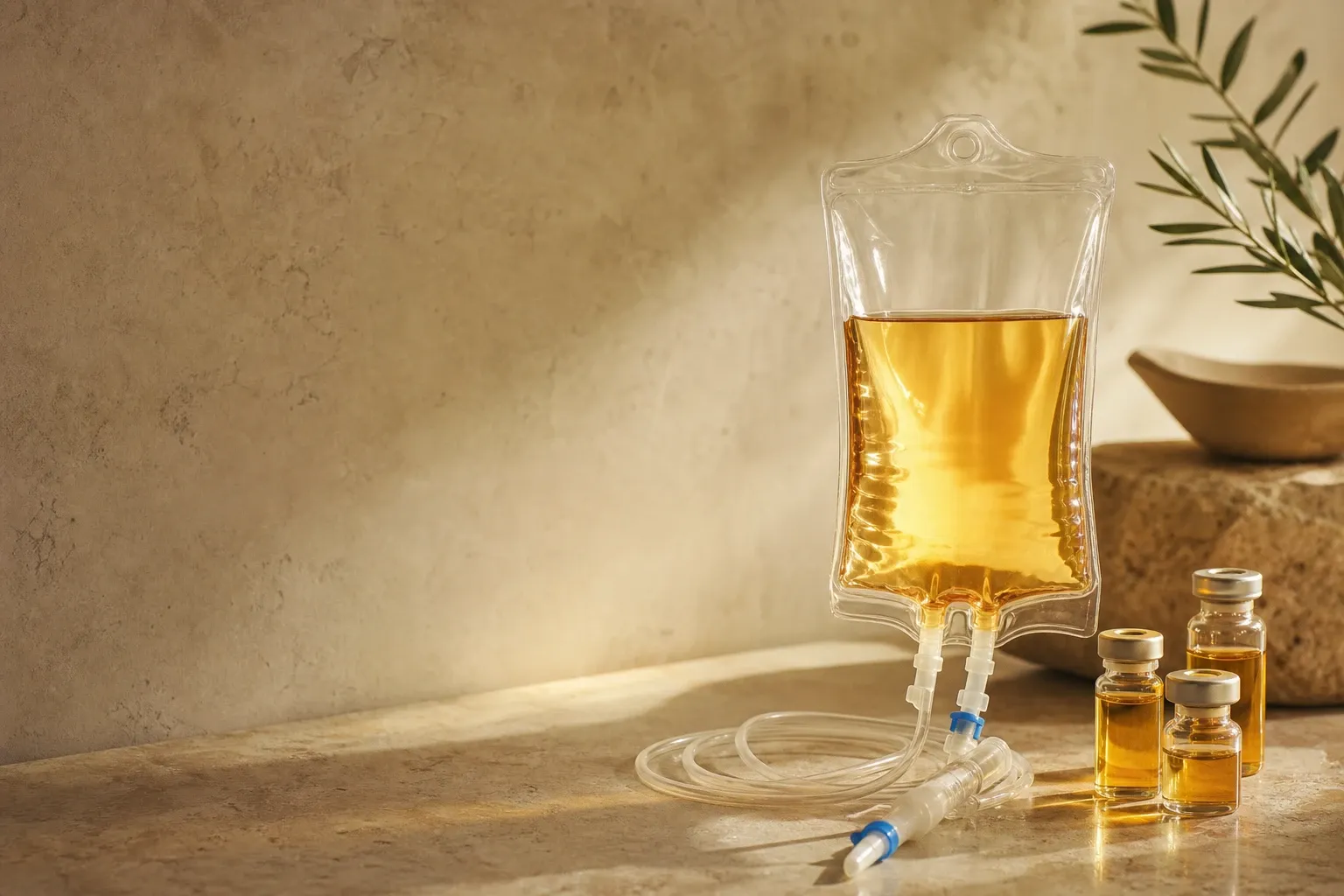
At our clinic glutathione is offered two ways: as a quick intramuscular injection, or added to an infusion from our IV therapy and vitamin injection menu. Which you choose is mostly a question of time and what else you want in the bag.
- Screening. your provider reviews your health history, medications, allergies and goals before anything is drawn up, and will tell you if a drip is not the right answer.
- Setup. For an injection, that is it: the shot takes seconds and you are out in about five minutes. For an infusion, your provider checks your vitals, settles you in a recliner and places a small catheter in the forearm.
- The session. An IV runs 30 to 60 minutes with a nurse monitoring the site. Most people read, work or nap.
- Afterward. No downtime with either route. You drive yourself home and go back to your day.
Frequency depends on your goals and how you respond. Many patients who continue come in every two to four weeks, and some do a short series and reassess. We would rather you try a few and judge for yourself than commit to a long package on the strength of a claim. Pricing is reviewed at your visit, and Cherry and CareCredit financing are available.
Who Benefits Most
Glutathione makes the most sense for healthy adults who treat it as a wellness service rather than therapy, and who have realistic expectations of a single session. That includes people carrying real oxidative load from sun, alcohol, smoking or hard training, and people already invested in the rest of the wellness services we offer in Lake Havasu City, where glutathione is one piece of a broader plan rather than a standalone fix.
It is not right for everyone. We ask patients to wait or choose something else if they are pregnant or breastfeeding without their obstetrician's approval, have a known sensitivity to sulfites or sulfur containing compounds, have asthma triggered by sulfites, are managing kidney disease, heart failure or any fluid restriction, or have an active infection or an unevaluated new symptom.
Occasionally the right outcome of a consultation is that we send you to your physician instead.
Frequently Asked Questions
What does glutathione do in the body?
Glutathione is your cells' primary antioxidant. It neutralizes reactive oxygen species produced during normal metabolism, regenerates vitamins C and E so they can keep working, and attaches to fat soluble toxins in the liver so your kidneys can clear them. It also supports immune cell function and protects mitochondria from the byproducts of energy production.
Do glutathione injections lighten skin?
We do not offer or market glutathione for skin lightening. Research on glutathione and pigmentation has used mostly oral and topical forms with mixed, modest results, and the FDA has warned about injectable skin lightening and bleaching products because they are unapproved and can be unsafe. If uneven pigmentation is your concern, a proper skin assessment and consistent sun protection will serve you far better.
Is oral glutathione as good as an injection?
It depends what you mean by good. Injection delivers the molecule directly and immediately, while oral absorption is slower and less complete. But a randomized trial found that consistent daily oral use did raise body stores over six months, so the old claim that swallowed glutathione is useless is not accurate. Injection wins on speed, oral wins on cost and convenience.
How often would I need a glutathione injection?
There is no established schedule, because there is no established dose response for wellness use. In practice, patients who continue with it typically come in every two to four weeks. We suggest starting with a few sessions and honestly assessing whether you notice a difference before committing to a longer course.
Are glutathione injections safe?
For appropriately screened healthy adults it is generally well tolerated, and the most common issues are soreness at the injection site or a brief sulfur taste or smell. The main considerations are sulfite sensitivity, asthma and pregnancy. Injectable glutathione is a compounded preparation rather than an FDA approved drug, which is one more reason to receive it from a licensed clinic with medical oversight.
Will I feel a difference right away?
Be cautious of anyone who promises you will. Any immediate lift after an infusion is most likely the fluids and B vitamins rather than the glutathione itself. Effects tied to antioxidant status, if they occur, build over weeks and are subtle. Individual responses vary widely, and some patients honestly notice very little.
Talk It Through With Us
If you want a straight conversation about whether glutathione belongs in your routine, our nursing team is happy to have it. Desert Oasis Wellness and Med Spa is at 2010 Injo Drive in Lake Havasu City, open Monday through Friday from 7:00 AM to 4:00 PM.
Call (928) 889-0155 to book a glutathione injection, an IV drip or a wellness consultation, and we will tell you plainly what we think it can and cannot do.