

Hair Loss Treatment for Women in Lake Havasu City
Find the Cause First, Then Treat It
- Common In:
- Women 30 to 70
- Primary Causes:
- Genetics, hormones, thyroid, iron, stress
- Treatment Time:
- 30 to 60 minutes
- Results:
- 3 to 6 months, then maintenance

What Hair Loss in Women Actually Looks Like
A Different Pattern Than Men Experience
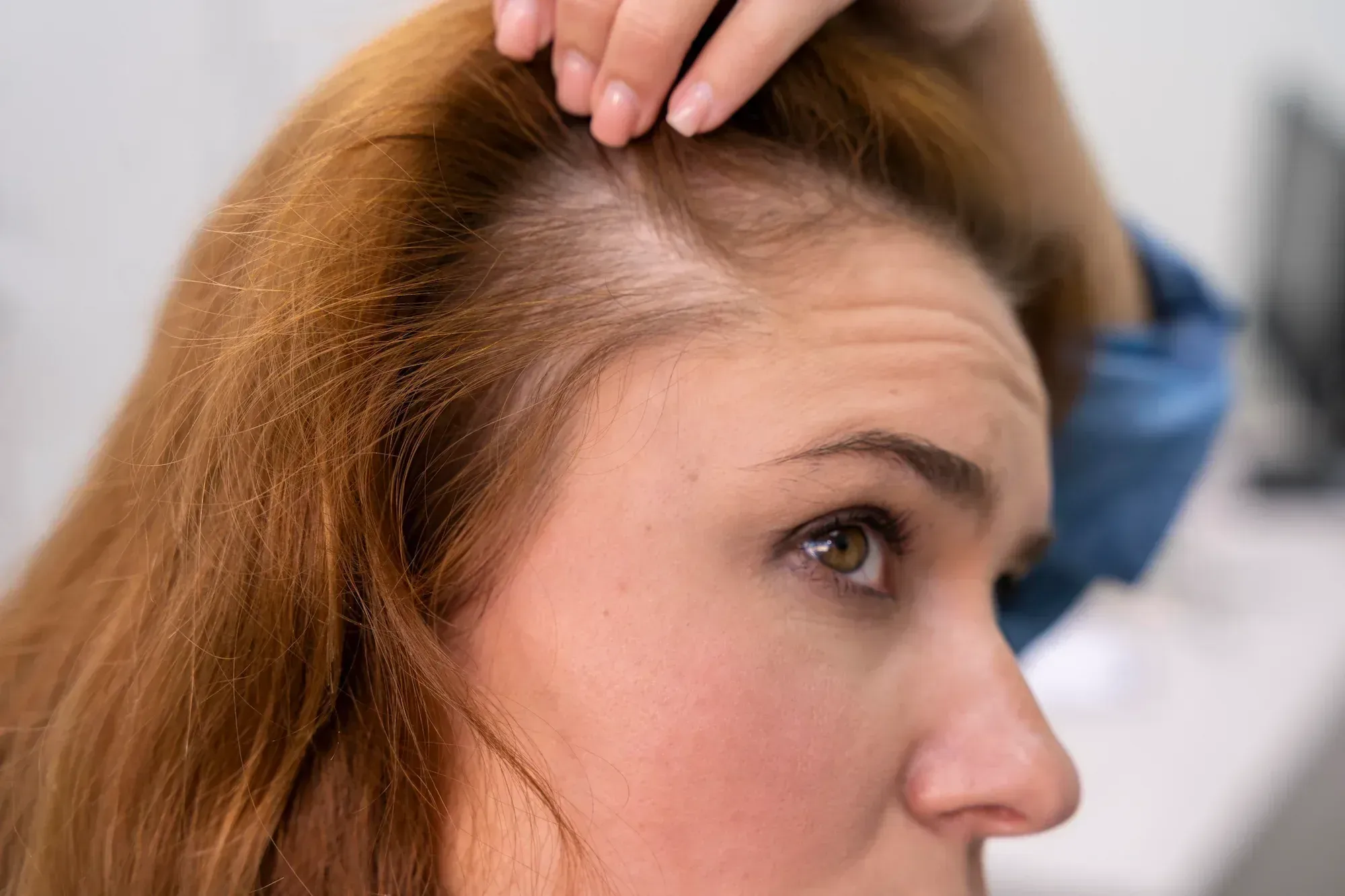
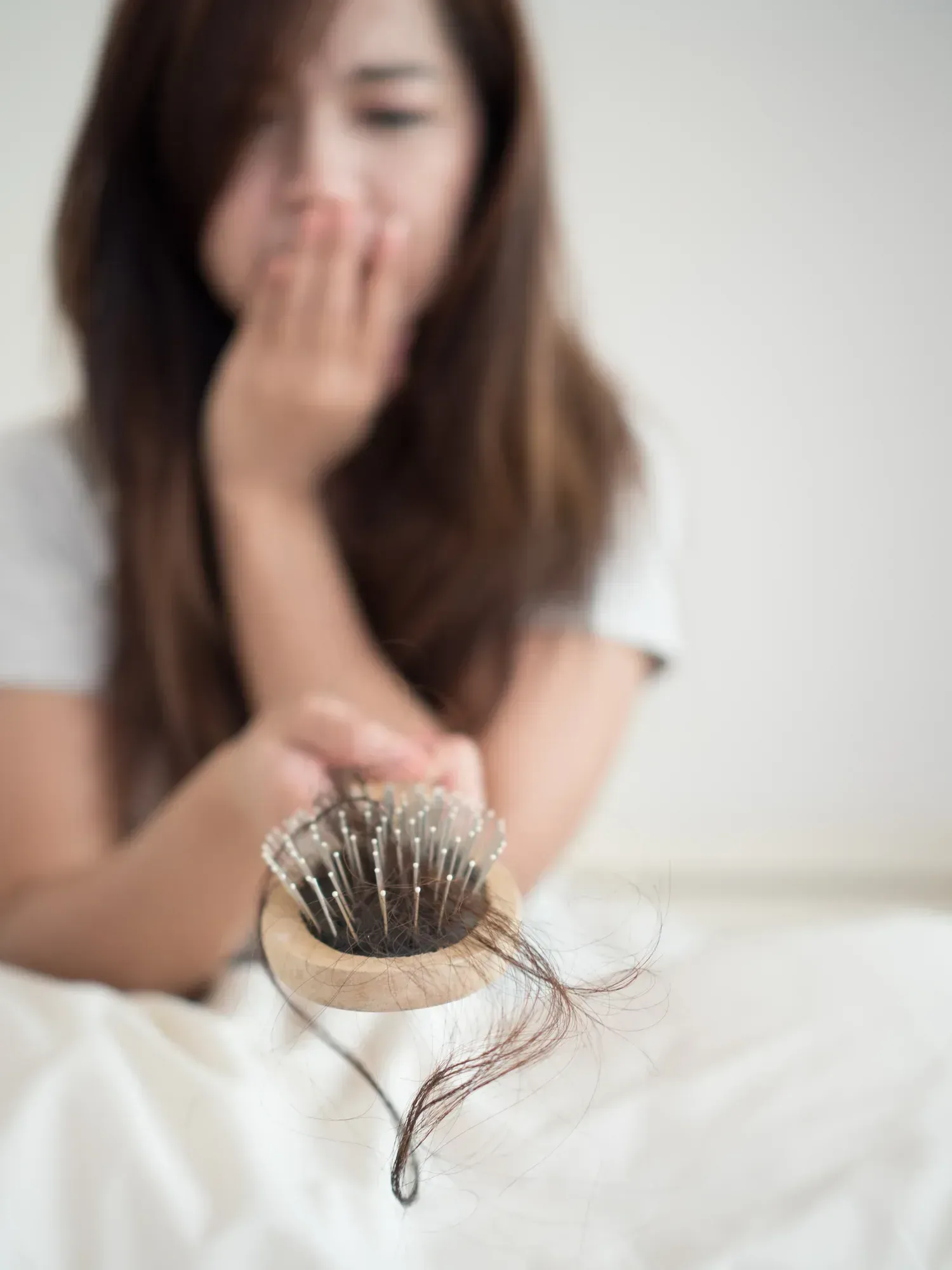
Hair loss treatment for women begins with a question that is too often skipped: what is actually causing the shedding. Women rarely lose hair the way men do. Instead of a receding hairline and a bald crown, most women notice a part that keeps widening, a ponytail that feels thinner in the hand, and more strands in the shower drain than used to be normal.
We hear this every week at Desert Oasis Wellness and Med Spa in Lake Havasu City, AZ, serving Havasu Foothills Estates, Desert Hills, the Riviera, Crystal Beach, Parker, Bullhead City, Kingman and the surrounding Mohave County communities.
Female pattern hair loss thins the hair diffusely across the top of the scalp while the frontal hairline usually stays intact. That diffuse pattern is exactly why it goes unnoticed for so long, and why women so often say the change crept up on them rather than arriving overnight. By the time the part looks wider in a photograph, the process has usually been underway for a while.
The emotional weight is real and rarely acknowledged. Patients describe rearranging their part, avoiding overhead lighting, choosing hats, or stepping out of photographs. Hair is tied to identity in a way that makes thinning feel much heavier than its medical severity suggests, and that alone is a completely legitimate reason to ask for help.
Why Women Lose Hair
The Real Differential Behind Thinning
01The Science
Hair grows in cycles. At any given moment most follicles are in an active growth phase and the rest are resting before they shed and regrow. Thinning appears when that balance shifts, either because follicles are miniaturizing and producing finer, shorter strands with each cycle, or because a large number of them were pushed into the resting phase all at once.
Female pattern hair loss, the most common form, is progressive miniaturization driven by genetics and follicle sensitivity to androgens. Telogen effluvium is the other pattern women see most: a sudden diffuse shed that begins two to four months after a trigger such as illness, high fever, surgery, severe stress, childbirth or rapid weight loss from crash dieting.
It looks frightening, yet it is usually self limiting once the trigger resolves. The American Academy of Dermatology points out that hereditary thinning and reactive shedding frequently overlap in the same patient, which is part of why self diagnosis goes wrong.
Then there are the medical drivers worth ruling out: thyroid disease in either direction, iron deficiency with or without anemia, polycystic ovary syndrome, and the hormonal shifts of postpartum and menopause. Traction alopecia is different again, caused by years of tight ponytails, braids, buns and extensions pulling steadily at the hairline.
Once we know which of these is driving your shedding, a regenerative option such as PRP hair restoration in Lake Havasu City becomes a targeted decision rather than a guess.
02Important to Know
When Thinning Needs Medical Evaluation First
Treating the Wrong Cause Wastes Time and Money
Not every case of thinning should go straight to a cosmetic treatment. Sudden loss, hair coming out in patches or distinct circular bald spots, rapid shedding over a matter of weeks, or thinning that arrives with scalp pain, burning, itching, redness or scaling all need medical evaluation before anything else.
So does hair loss paired with fatigue, weight change, irregular cycles or new coarse facial hair, since those point toward thyroid or hormonal causes rather than a cosmetic one.
The reason is practical. Lab work for thyroid function, ferritin and iron studies, vitamin D and hormone levels identifies a correctable cause in a meaningful share of women. If low iron or an underactive thyroid is behind the shedding, correcting it is what regrows the hair, and paying for a treatment series while the underlying problem continues costs you months and money for very little.
Scarring forms of hair loss are the other reason to move quickly, because follicles lost to scarring do not come back.
Hormonal timing matters too. Shedding that starts in perimenopause or after menopause often tracks with the same estrogen decline behind hot flashes, sleep disruption and mood changes, and is worth addressing alongside menopause symptom management in Lake Havasu City. Once the medical picture is clear, in office care can move forward with confidence: scalp microneedling for thinning hair to stimulate the follicle environment, and hair growth treatments in Lake Havasu City for the daily, at home half of the plan. Combining approaches consistently outperforms any single one used on its own.
What Drives Hair Loss in Women?
Most women we see have more than one factor at work at the same time, which is why a single treatment applied to a mixed picture so often disappoints.
- 01Female Pattern Hair LossGenetics and follicle sensitivity to androgens gradually miniaturize hairs, so the part widens while the front hairline holds.
- 02Telogen EffluviumIllness, high fever, surgery, severe stress or crash dieting push follicles into resting phase, with heavy shedding two to four months later.
- 03Postpartum and Menopausal ShiftsEstrogen falls sharply after childbirth and again through perimenopause, ending the growth phase for many follicles at once.
- 04Thyroid DiseaseBoth underactive and overactive thyroid disrupt the growth cycle and cause diffuse thinning that improves once levels are corrected.
- 05Iron DeficiencyLow ferritin from heavy periods, restrictive eating or blood loss leaves follicles without what they need to hold a growth phase.
- 06Traction AlopeciaYears of tight ponytails, braids, buns and extensions pull at the hairline and temples until those follicles stop regrowing.
Why Choose Desert Oasis Wellness and Med Spa for Women's Hair Loss Care
Our medical director brings more than thirty years of clinical experience to hair and scalp concerns, and she starts by working out why your hair is thinning before recommending anything. Women's hair loss is a medical question first and a cosmetic one second.
- Cause First, Treatment Second
- We look for thyroid, iron and hormonal drivers before recommending any treatment series.
- Nurse Practitioner Led
- Your scalp and history are assessed by an experienced APRN, not handed straight to a device protocol.
- Honest Expectations
- We tell you what a treatment can and cannot do for your pattern, and how long results realistically take.
- Combination Planning
- In office sessions and daily home care are sequenced together, which outperforms either one alone.
Hair Restoration Options Compared
Compare the non-surgical hair restoration options we offer women in Lake Havasu City to see which suits your pattern.
| Treatment | How It Works | Best For | Downtime | Results Timeline |
|---|---|---|---|---|
| PRP Hair Restoration | Concentrated platelets from your own blood are injected into thinning areas | Female pattern thinning where follicles are still active | Scalp tenderness for a day or two | 3 to 6 months across a series |
| Scalp Microneedling | Controlled micro-channels stimulate the scalp and improve topical absorption | Diffuse thinning and pairing with topical treatments | Mild redness for about 24 hours | 3 to 6 months with repeat sessions |
| Hair Growth Treatments | Physician guided topical and daily support products for scalp and follicle health | Daily maintenance and protecting in office results | None | 6 months of consistent use |
You May Be Experiencing Hair Loss If...
These are the changes women describe most often at a first consultation, and noticing them early gives us far more to work with.
A Widening Part
You can see more scalp along your part than you could a year ago, especially under bright or overhead light.
A Thinner Ponytail
Your ponytail feels noticeably smaller in your hand, or you now need an extra wrap of the elastic to hold it.
Increased Shedding
More hair on the pillow, in the brush and in the shower drain than has ever been normal for you.
Finer, Shorter Strands
New growth comes in wispy and breaks before it reaches length, so the ends look sparse and see through.
Thinning at the Temples
The hair along your hairline and temples has receded where ponytails, braids or extensions used to pull.
Shedding That Followed an Event
The loss began roughly two to four months after an illness, surgery, childbirth, a stressful stretch or a rapid diet.



Explore More Related Treatments
PRP Hair Restoration
Your own platelet rich plasma, injected to wake dormant follicles.
- Your Own Blood
- No Surgery
- One Hour Visit
Explore More Related Treatments
Scalp Microneedling
Controlled micro-injury therapy that wakes up thinning follicles.
- No Surgery
- Better Uptake
- Minimal Downtime
Explore More Related Treatments
Hair Growth Treatments
Non-surgical scalp therapy, daily support and a six month clinical plan
- No Needles
- Zero Downtime
- Balanced Scalp
Explore More Related Treatments
Procell Microchanneling
Microchannels that carry growth-factor serums into skin and scalp.
- Real Scar Change
- Deeper Delivery
- Texture Gains


Your Questions
Frequently Asked Questions
Why is my hair thinning if no one in my family is bald?
Do I need lab work before starting treatment?
When should I see a provider urgently about hair loss?
Does thinning hair treatment for women actually work?
How long before I see thicker hair?
Is my hair loss related to menopause?
What happens at a hair loss consultation?
Schedule Today Your Hair Loss in Women and Men Consultation
Scientific References
- Müller et al., An Bras Dermatol. (2023). Female-pattern hair loss: therapeutic update. PMID: 37003900.
- Dakkak et al., Am Fam Physician. (2024). Hair Loss: Diagnosis and Treatment. PMID: 39283847.
- van et al., Cochrane Database Syst Rev. (2016). Interventions for female pattern hair loss. PMID: 27225981.
- Gupta et al., Dermatol Ther. (2020). Platelet-rich plasma for androgenetic alopecia: Efficacy differences between men and women. PMID: 32761771.
- Zhang et al., J Cutan Med Surg. (2023). Platelet-Rich Plasma for Androgenetic Alopecia: A Systematic Review and Meta-Analysis of Randomized Controlled Trials. PMID: 37533146.
- Ahmed et al., Arch Dermatol Res. (2025). Evaluating the efficacy and safety of combined microneedling therapy versus topical Minoxidil in androgenetic alopecia: a systematic review and meta-analysis. PMID: 40056230.
- American Academy of Dermatology. (2024). Guidance on hair loss in women, including when thinning warrants medical evaluation.