

Sun Spot Removal in Lake Havasu City
Clear the Marks the Desert Sun Left
- Common In:
- Adults 30 and older
- Primary Causes:
- Cumulative UV exposure
- Treatment Time:
- 20 to 45 minutes
- Results:
- Visible in 1 to 3 weeks

What Sun Damage and Age Spots Really Are
Recognizing the Signs
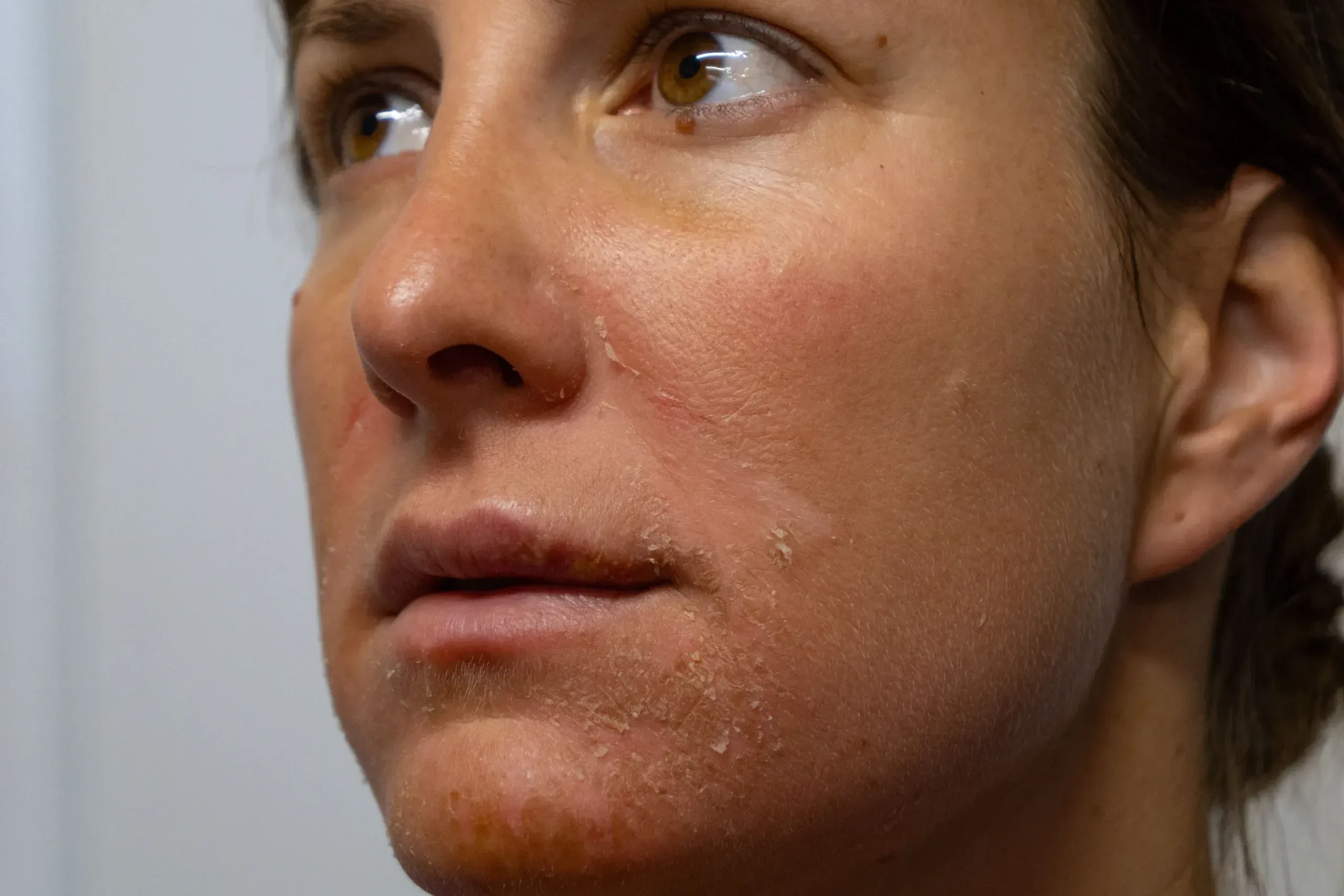
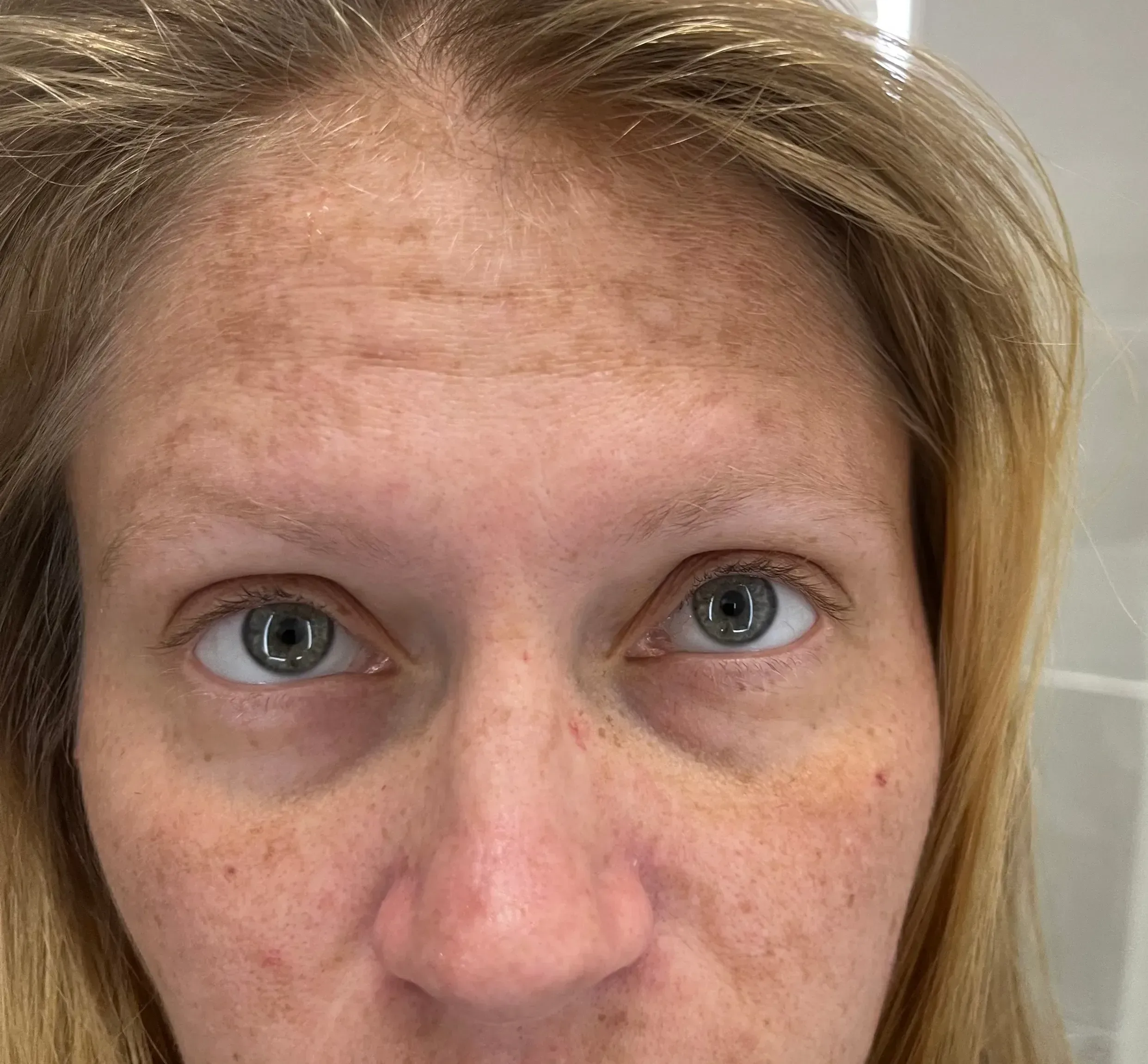
Sun spot removal addresses the flat brown patches, freckling and mottled tone that ultraviolet light prints onto skin over decades. Clinically most of these marks are solar lentigines, discrete clusters of pigment left where UV exposure pushed pigment-producing cells into permanent overproduction. They are not dirt, they do not scrub off, and unlike a summer tan they do not fade when the season turns.
When the backs of your hands, your chest or your cheekbones start reading a decade older than the rest of you, what you are seeing is accumulated sun damage rather than age by itself. Our team treats this concern for patients throughout Lake Havasu City, AZ, serving Havasu Foothills Estates, Desert Hills, the Riviera, Crystal Beach, Parker, Bullhead City, Kingman and the surrounding Mohave County communities.
Few places in the country deliver ultraviolet light the way this one does. Havasu runs sunny most of the year, and life here happens on the water, on the trails and on the patio, where light bouncing off the lake doubles what reaches your face. Patients tell us the spots crept in season by season until makeup stopped covering them and long sleeves became a habit.
One thing comes before anything cosmetic. Sun spot removal is for spots already known to be harmless. Any spot that changes size, shape or color, bleeds, itches, crusts, or simply looks different from your others needs to be examined by a dermatologist or physician first. Treating an undiagnosed lesion with light or acid can erase the visible warning sign of a skin cancer while leaving the disease underneath, which is why assessment always comes before treatment here.
Why Sun Spots Form in the Desert
Understanding the Root Causes
01The Science
Melanin is your skin's own sunscreen. Each time ultraviolet light reaches the basal layer, melanocytes manufacture pigment and hand it to the surrounding skin cells as a shield. In young skin that pigment rides the normal turnover cycle and clears in roughly 28 days. After years of repeated exposure, individual melanocytes become locked into overproduction and cluster together, and the pigment they deposit stops clearing at all.
UVA reaches deeper than UVB, down into the dermis, where it degrades collagen and elastin at the same time it drives pigment production. That is why sun damage almost never arrives as spots alone: the same exposure that prints lentigines also thins the skin, coarsens texture and breaks small surface capillaries.
The American Academy of Dermatology notes that this damage is cumulative, so the exposure that shows on your hands today was banked over many summers.
Because the pigment sits in defined clusters rather than spreading evenly, it responds to energy that targets color selectively while leaving surrounding skin alone. That selectivity is the reason IPL photofacial treatment in Lake Havasu City is usually the first line for scattered brown spots, and why topical products, which cannot reach or dismantle an established cluster, so often stall.
02Deeper Understanding
When a Spot Is Not Just a Sun Spot
Why Diagnosis Comes Before Treatment
Not everything the sun leaves behind is harmless. Actinic keratoses, the rough scaly patches that feel like sandpaper before they look like anything, are precancerous. Lentigo maligna and early melanoma can both begin as a flat brown patch that at a glance looks exactly like an age spot. In a region with this much year-round exposure, that overlap is common enough that we take it seriously on every consultation.
Any spot that has changed in size, shape or color, has irregular or blurred borders, bleeds, itches, crusts or scabs, or simply looks unlike your other spots must be evaluated by a dermatologist or physician before any cosmetic treatment. Lasers and peels remove pigment.
If that pigment belongs to a skin cancer, the treatment clears the visible warning sign without touching the disease underneath and can delay diagnosis by months or years.
The AAD's ABCDEs of melanoma are a useful home check, and anything that trips one of them is a referral, not a treatment. If you are unsure about a spot, we will tell you to get it read first.
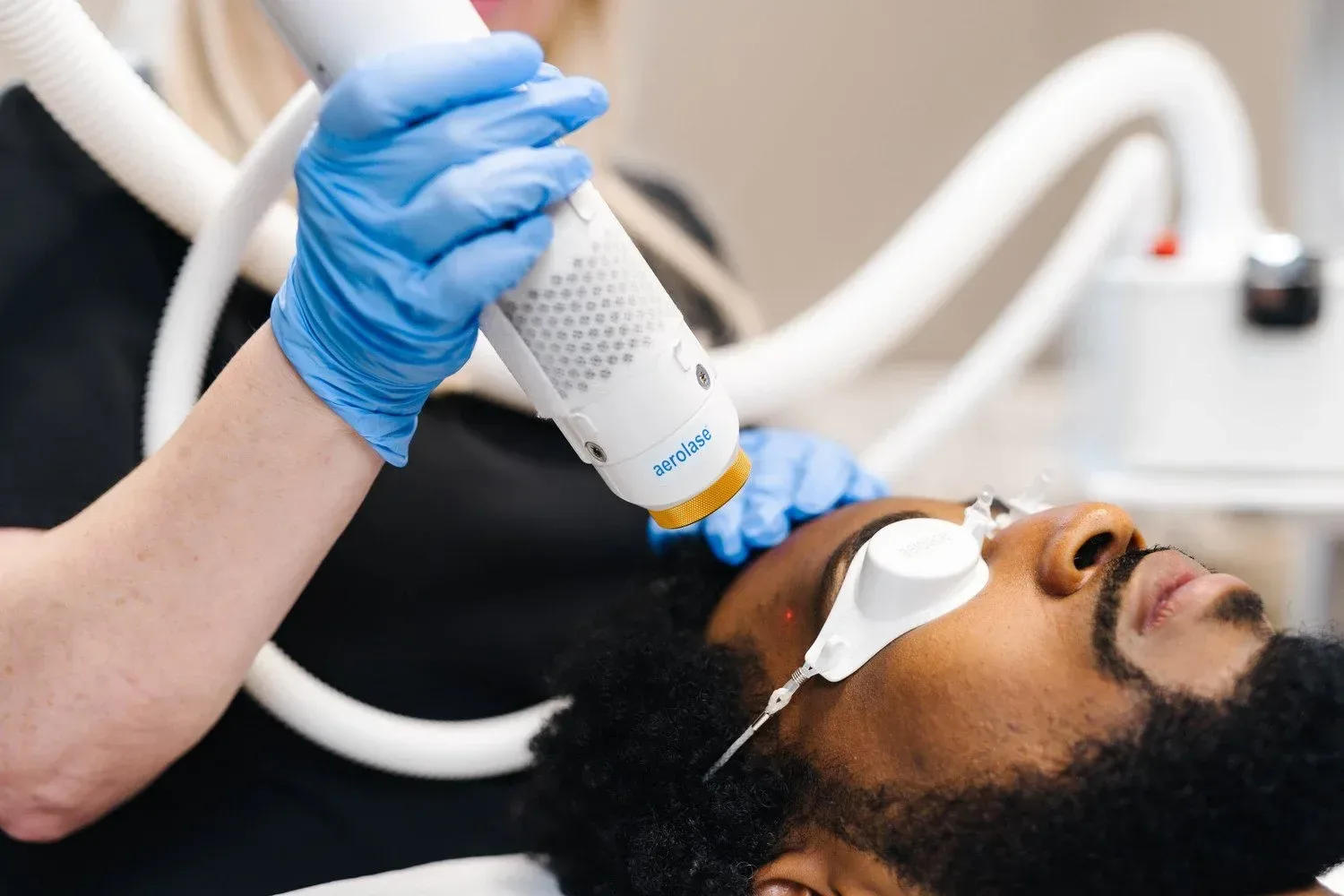
Once a lesion is confirmed benign, sequencing matters. Light-based clearance usually goes first, because it lifts the discrete spots quickly, and resurfacing follows to even the background tone the spots were hiding in. Chemical peels with VI Peel in Lake Havasu City cover the areas people forget, with body formulations for the chest, shoulders, arms and hands, while Aerolase laser treatment gives us a gentler option for deeper skin tones and for patients whose pigment tends to rebound after broadband light.
Left alone, none of this improves on its own: pigment accumulates, and the next hot season adds to it.
What Accelerates Sun Damage and Age Spots?
Sun spots are the record of everything your skin has absorbed, and in this climate several factors stack on top of one another year after year.
- 01Year-Round Desert UVLake Havasu City sees intense sun in every season, so exposure never pauses the way it does in cooler climates.
- 02Reflection Off the WaterBoating and shoreline days bounce light back up at your face, chest and forearms, effectively doubling the dose.
- 03Decades of AccumulationSpots surface in your forties and fifties from exposure banked in your teens and twenties, long after the burns healed.
- 04Skin Tone and GeneticsFair skin marks sooner, but deeper tones pigment more stubbornly once damage sets in, which changes the treatment choice.
- 05Hormonal Pigment TriggersPregnancy, hormone therapy and some medications prime pigment cells, so sun exposure produces darker marks faster.
- 06Inconsistent Sun ProtectionSunscreen applied only on beach days leaves the daily incidental exposure of driving, walking and errands untouched.
Why Choose Desert Oasis Wellness and Med Spa for Sun Damage Care
Sun damage is the concern we see most often here, and no two patterns are alike. Our certified laser technician, and our licensed aesthetician assess pigment depth and skin tone first, then build the plan around what your skin will actually tolerate in this climate.
- Safety Screening First
- We look at every lesion before we treat, and anything suspicious goes to a physician or dermatologist rather than under a laser.
- Matched to Your Skin Tone
- Broadband light suits fair skin, while a 650-microsecond laser handles deeper tones that would otherwise rebound with pigment.
- Face and Body Coverage
- Chest, shoulders, arms and hands show desert sun as clearly as the face, and we treat those areas rather than the face alone.
- Aftercare Built for Havasu
- Your plan includes the sun protection and timing needed to hold results through an Arizona summer, not just clear the spots once.
Treatment Options Comparison
Compare the sun damage treatments we offer in Lake Havasu City to see which one suits your skin tone and the areas you want cleared.
| Treatment | How It Works | Best For | Downtime | Results Timeline |
|---|---|---|---|---|
| IPL Photofacial | Broadband light absorbed by pigment | Scattered brown spots on fair skin | None, spots darken then flake | 1 to 3 weeks |
| Chemical Peels | Medical-grade acid resurfacing | Mottled tone on face, chest and hands | 3 to 7 days of peeling | 2 to 4 weeks |
| Aerolase | 650-microsecond 1064 nm laser energy | Deeper skin tones and sensitive skin | None to minimal redness | 2 to 4 weeks |
You May Be Dealing With Sun Damage If...
Most sun spots are simply cosmetic, and recognizing them helps you decide what to treat. Anything that looks irregular or is changing belongs with a dermatologist or physician first.
Spots on Your Hands
The backs of your hands carry flat brown marks that appeared gradually and now read older than the rest of you.
Mottled Chest and Decollete
Open necklines reveal patchy brown and pink discoloration across the chest that did not exist ten years ago.
Marks That Never Fade
The spots stay through winter instead of lightening the way a tan does, and brightening serums have not moved them.
Uneven Tone Under Makeup
Foundation covers the spots only with a heavier layer, and by afternoon the pigment shows through again.
Rough Sandpaper Patches
Some areas feel scaly rather than smooth, which points to sun damage that should be reviewed medically before treatment.
Freckling That Spread
What started as summer freckles across your cheeks and shoulders has merged into broader patches that stay year round.


Explore More Related Treatments
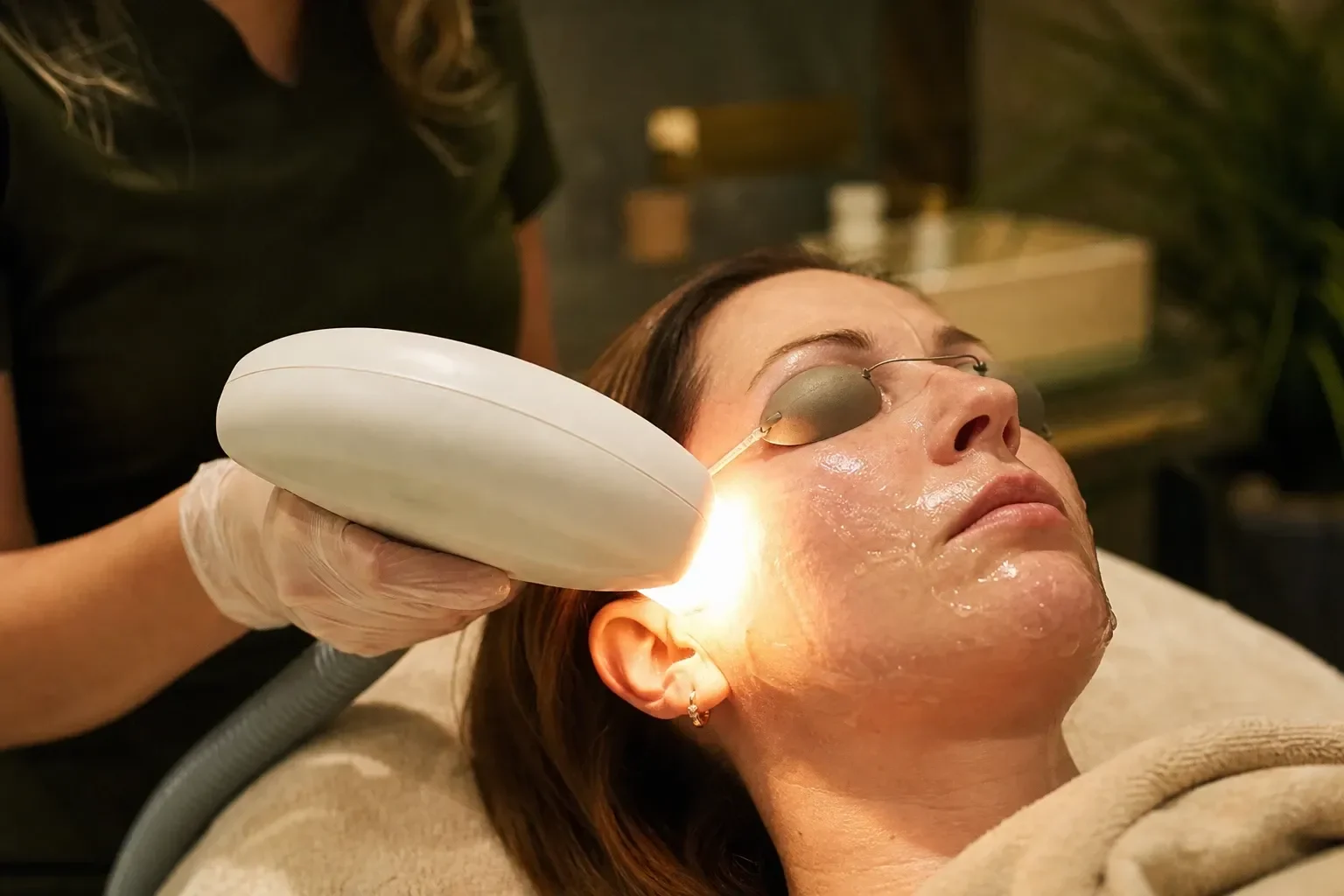
IPL Photofacial
Broad-spectrum light that fades sun damage, age spots and facial redness.
- Fast Clearing
- No Real Downtime
- Brown and Red
Explore More Related Treatments
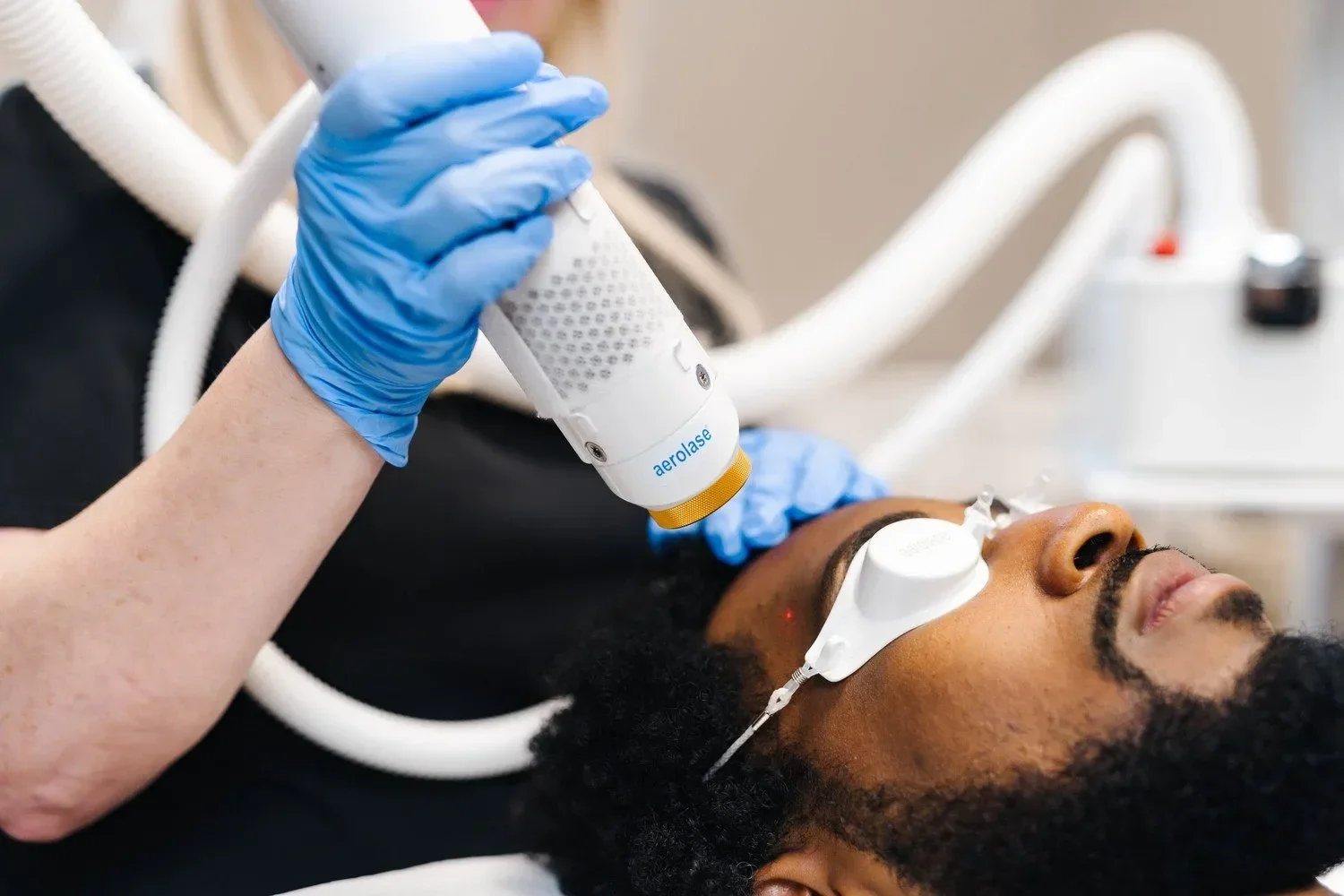
Aerolase (Neo and Era Elite)
Gentle 650 microsecond laser energy that clears, calms and renews skin.
- All Skin Tones
- Neo Elite (1064nm) - Non-Ablative
- Era Elite (2940nm) - Ablative Resurfacing
Explore More Related Treatments
Laser Skin Resurfacing with NOUVADerm
A 1927 nm thulium fractional laser that resurfaces tone, texture and pigment.
- Pigment Control
- Even Tone
- Smoother Texture
Explore More Related Treatments
Chemical Peels
Medical-grade VI Peel formulas that resurface skin with very little downtime.
- Safe for All Tones
- No Pre-Peel Prep
- Nearly Painless


Your Questions
Frequently Asked Questions
When should I see a doctor about a spot instead of booking treatment?
What actually causes age spots to appear?
Does sun spot removal actually work, or do the spots come back?
How long until I see results?
Can you treat my chest, shoulders and hands, not just my face?
Is treatment safe for darker skin tones?
Can I be treated during the summer?
What does the consultation involve?
Schedule Today Your Sun Damage & Age Spots Consultation
Scientific References
- Kaltchenko et al., Am J Clin Dermatol. (2025). Photoaging: Current Concepts on Molecular Mechanisms, Prevention, and Treatment. PMID: 40072791.
- Kerns et al., Plast Reconstr Surg. (2021). A Role for NRF2-Signaling in the Treatment and Prevention of Solar Lentigines. PMID: 34847095.
- Tanaka et al., Lasers Surg Med. (2016). Objective assessment of intensive targeted treatment for solar lentigines using intense pulsed light with wavelengths between 500 and 635 nm. PMID: 26462982.
- Waibel et al., Dermatol Clin. (2009). Photorejuvenation. PMID: 19850194.
- Bhardwaj et al., Front Med (Lausanne). (2021). Professional-Grade TCA-Lactic Acid Chemical Peel: Elucidating Mode of Action to Treat Photoaging and Hyperpigmentation. PMID: 33681250.
- American Academy of Dermatology. (2024). The ABCDE warning signs used to identify pigmented lesions that require medical evaluation.