
Laser Skin Resurfacing with NOUVADerm in Lake Havasu City
- Wavelength:
- 1927 nm thulium
- Laser Type:
- Non-ablative fractional
- Typical Series:
- 3 sessions, monthly
- Studied Skin Types:
- Fitzpatrick II to V

Advanced Treatment
Laser Skin Resurfacing
Laser skin resurfacing in Lake Havasu City, AZ uses the NOUVADerm 1927 nm thulium fractional laser to lift sun damage, even out pigment and refine rough texture without removing the surface of your skin. We care for patients across Lake Havasu City, AZ, serving Havasu Foothills Estates, Desert Hills, the Riviera, Crystal Beach, Parker, Bullhead City, Kingman and the surrounding Mohave County communities.
At Desert Oasis Wellness and Med Spa, our owner and certified laser technician and our licensed aesthetician, who brings more than 13 years of skin experience, perform every resurfacing session. Our medical director, with 30 plus years in medicine and 32 years in Lake Havasu, oversees each plan.
The Challenge
Why Resurfacing Reaches What Creams Cannot
Understanding Fractional Repair
You have tried the serums, the brightening creams and the exfoliating acids, and your skin is still blotchy. Brown patches sit across your cheeks and upper lip and come back every summer. Pores look larger than they used to, fine lines have settled around your eyes and mouth, and the whole surface has a dull, rough quality that makeup catches on rather than covers.
Many patients here carry decades of Arizona sun on the face, neck and chest, and topical products only ever reach the outermost layer of that damage.
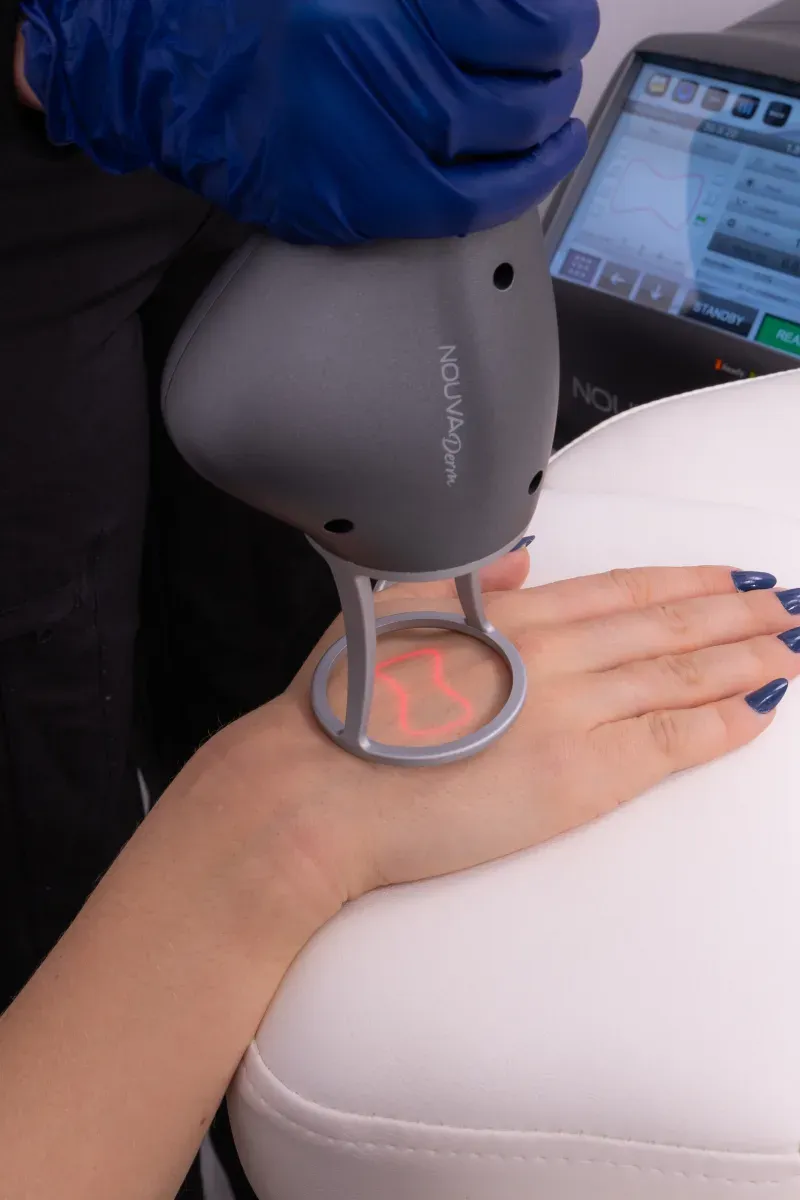
Resurfacing works at a different depth. The NOUVADerm laser emits 1927 nm thulium energy, a wavelength strongly absorbed by water in the skin, and delivers it as thousands of microscopic columns rather than one continuous sheet. Each column triggers repair while the untreated skin between columns keeps the surface intact and speeds healing.
That fractional, non-ablative pattern is why a systematic review of 17 studies covering 448 participants found improvements in skin texture, pigmentation and scar appearance with an acceptable safety profile and only mild, transient side effects.
Understanding Your Treatment
What Is Laser Skin Resurfacing?
The Science of Fractional Resurfacing
Laser skin resurfacing uses focused light to remodel skin from within rather than sanding it away. We offer it on two systems: the NOUVADerm 1927 nm thulium fractional laser, a non-ablative option that excels at pigment, tone and surface texture, and the Aerolase Era Elite 2940 nm erbium laser, an ablative option for deeper texture, scars and fine lines. At your consultation we match the system to your skin and goals.
Because the beam is fractionated, only a portion of the treated area receives energy in any pass, and the intact skin between those columns supports faster recovery than fully ablative resurfacing. Across the published literature, the most common protocol is three sessions at monthly intervals, and it sits alongside the rest of our laser menu in Lake Havasu City.
Treatment Timeline:
- First Signs:
- Brighter tone as flaking settles
- Full Effect:
- About 120 days in published studies
- Typical Series:
- 3 sessions at monthly intervals
- Side Effects:
- Mild and transient in the literature
What We Treat
Resurfacing Treatment Areas
Tone, Texture and Pigment
- Fine Lines and Wrinkles
- Fractional columns prompt new collagen over weeks
- Sun Damage and Sunspots
- Lifts brown spots earned from years of Arizona sun
- Melasma
- Lowered MASI scores across published thulium studies
- Uneven Pigmentation
- Evens blotchy tone on the face, neck and chest
- Enlarged Pores and Texture
- Refines coarse surface texture and visible pore size
- Acne Scars
- Improves scar appearance as new collagen matures
Benefits of Laser Skin Resurfacing
Measured In Published Studies

Resurfacing vs. Alternatives
Resurfacing with NOUVADerm is the option we reach for when pigment and surface texture are the problem rather than deep laxity; when deeper resurfacing is called for, we turn to the Aerolase Era Elite. Here is how each compares.
| Treatment | Mechanism | Depth | Best For | Series | Surface Removed |
|---|---|---|---|---|---|
| NOUVADerm Resurfacing | 1927 nm thulium fractional | Epidermis to upper dermis | Pigment, tone, texture | 3 sessions, monthly | No, non-ablative |
| Aerolase Era Elite | 2940 nm fractional erbium | Surface resurfacing | Texture and scars | 3 to 6 sessions | Yes, ablative |
| IPL Photofacial | Broadband pulsed light | Selective targets | Brown spots, redness | 3 to 5 sessions | No |
| Morpheus8 | RF microneedling | Deep dermis | Laxity and deep scars | 1 to 3 sessions | No |
| Chemical Peel | Acid exfoliation | Epidermis | Surface dullness | Series or single | Yes, chemically |








Is This Right for You
Who Is a Good Candidate for Resurfacing?
Finding Your Clearest Skin
Laser skin resurfacing suits patients whose main complaints are pigment, tone and surface texture rather than sagging. Published studies of the 1927 nm thulium wavelength have enrolled Fitzpatrick skin types II through V, including patients with recalcitrant melasma who had not responded to topical therapy.
Ideal Candidates for Resurfacing
- Adults with sun damage, sunspots or blotchy pigmentation from years on the lake
- Patients with melasma and stubborn hyperpigmentation that creams have not solved
- Anyone bothered by rough texture, dull skin or enlarged pores
- Patients with fine lines and early wrinkling who are not ready for surgery
- Patients with acne scarring who want surface refinement alongside other treatments
- Anyone willing to commit to a short series and daily sun protection afterward
Who Should Wait or Avoid Resurfacing
- Active infection, open wounds or cold sores in the treatment area
- Recent isotretinoin use, typically within the past six months
- Pregnancy or breastfeeding, where we defer elective laser care
- A fresh tan or sunburn on the area to be treated
- Photosensitizing medications such as certain antibiotics or diuretics
- History of keloid scarring, which we assess before any resurfacing
One honest caveat from the literature: melasma is prone to relapse, and the systematic review of the 1927 nm wavelength recorded recurrences even after successful clearing. That is a feature of melasma itself rather than of this laser, and it is why maintenance and strict sun protection are part of every plan.
Bring your full medication list to your consultation so your provider can confirm resurfacing is the right and safe choice for you.

Your Experience
What Happens During Your Resurfacing Session
Step-by-Step Process
Consultation
Your technician assesses your pigment, texture and Fitzpatrick type, then sets your NOUVADerm parameters.
Preparation
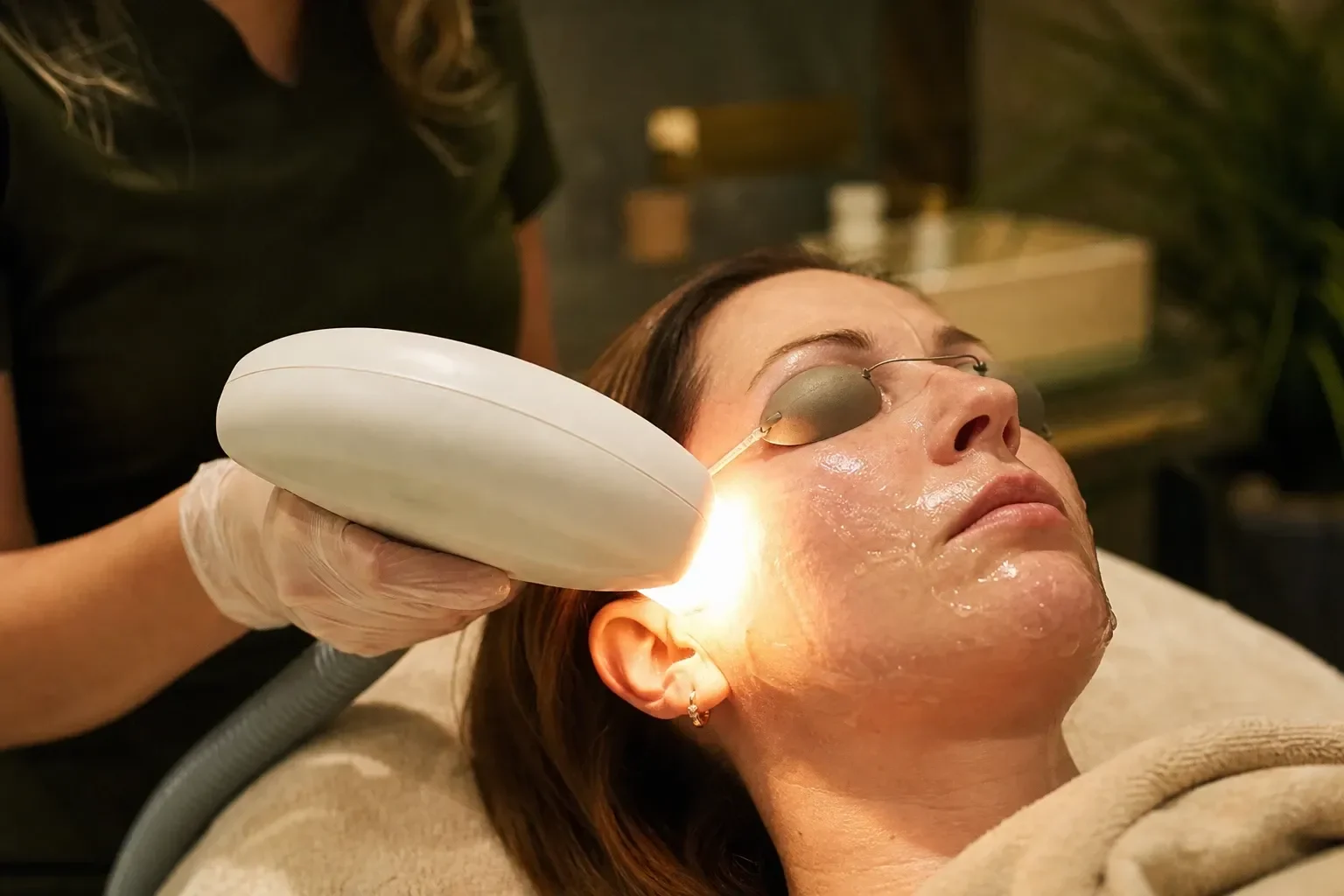
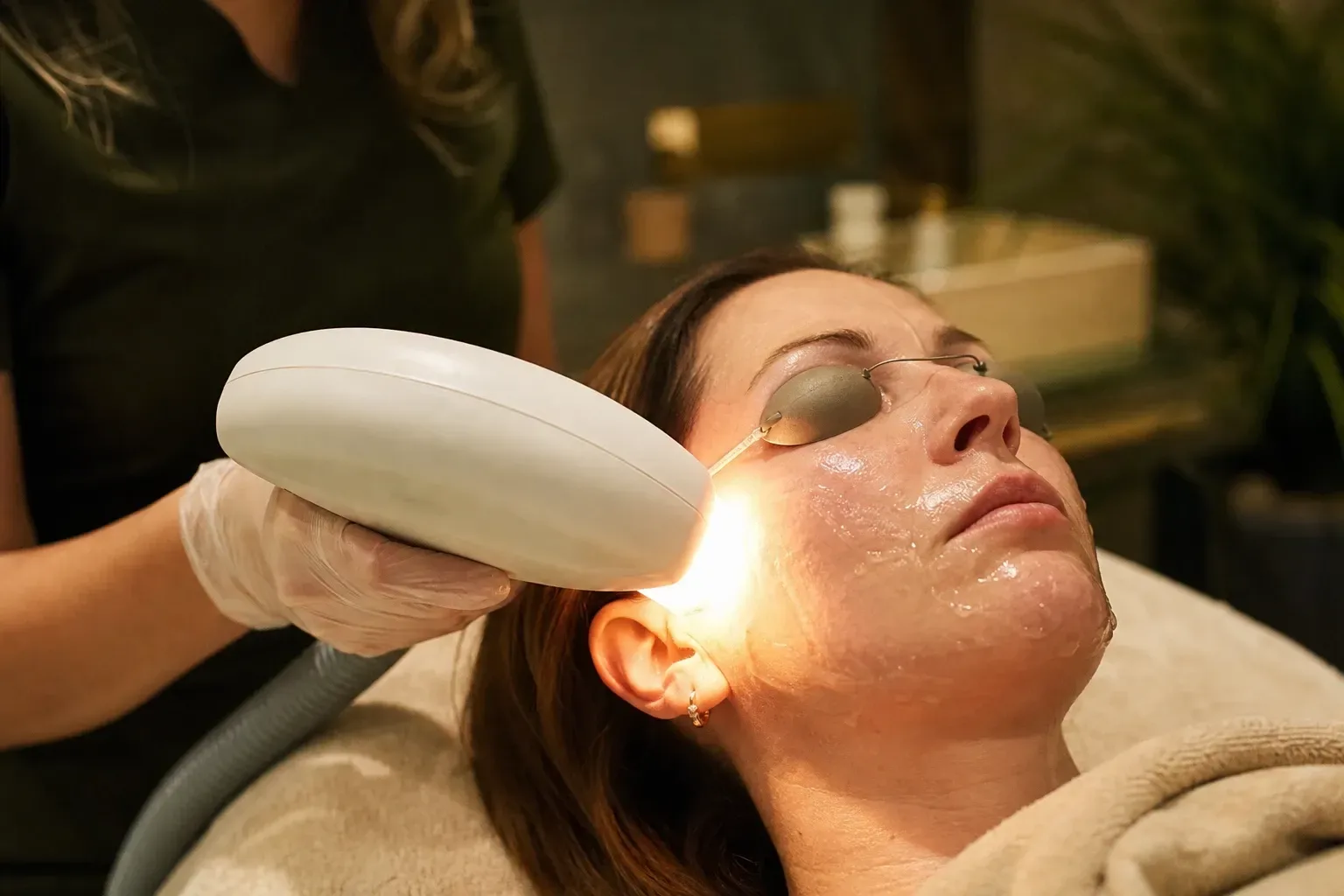
Your technician cleanses the area and fits protective eyewear. A topical numbing cream is applied when needed.
Fractional Pass
Your technician moves the handpiece across the area, delivering 1927 nm energy as microscopic columns.
Cooling and Calming
Your technician cools the treated skin and applies a barrier-supporting serum before you leave.
Aftercare
You go home with a simple regimen and mineral sunscreen, which is not optional after resurfacing.
Risks and Side Effects
What to Know
Common Resurfacing Side Effects
Redness and a warm, sunburn like feeling in the treated area are expected immediately after a session, along with mild swelling. Over the following days the skin typically feels rough, like fine sandpaper, and sheds as the treated columns clear.
Across the published literature on the 1927 nm thulium wavelength, adverse events have been consistently described as mild and transient, and a retrospective series of 100 melasma patients reported no major side effects.
Rare Complications
Blistering, crusting, prolonged redness, temporary lightening or darkening of pigment and, very rarely, scarring can occur, most often when skin has had recent sun exposure or when settings are pushed too aggressively. Cold sore reactivation is possible in patients with a history of oral herpes, so we prescribe preventive antivirals when that history exists.
Melasma specifically carries a real risk of relapse rather than of injury, which the systematic review of this wavelength documented.
Safety and Sun Protection
The American Academy of Dermatology recommends that laser resurfacing be delivered by trained professionals under medical supervision. At Desert Oasis Wellness and Med Spa, our laser providers are certified laser technicians working under medical direction, and every plan begins with a skin assessment and conservative settings.
Daily broad spectrum sunscreen is required afterward, because new skin brought to the surface is more vulnerable to the same sun that caused the damage.
Investment
Laser Skin Resurfacing Cost
Pricing and Payment Options
How Much Does Laser Skin Resurfacing Cost?
Resurfacing pricing depends on how large an area you treat, how aggressive your settings need to be and how many sessions your skin calls for. Full face costs more than a targeted area, and adding the neck, chest or hands increases treatment time. Because the published literature converges on three sessions at monthly intervals, we quote packages rather than single sessions whenever a series makes clinical sense.
If sun damage and age spots are your main concern, we will also map out how resurfacing fits alongside your skincare so you are not paying for visits you do not need. Exact pricing is discussed during your personalized consultation, once your technician has assessed your skin in person.
Flexible Payment Options
We want your plan to fit your budget, so Desert Oasis Wellness and Med Spa offers financing alongside standard payment methods.
- Cherry - fast approval with monthly payment plans and no hard credit check to see your options.
- CareCredit - a healthcare credit line with promotional financing periods for qualifying purchases.
Call us at (928) 889-0155 and we will walk you through package pricing and financing before you commit to anything.
The Desert Oasis Difference
Why Choose Desert Oasis Wellness and Med Spa for Laser Skin Resurfacing
Lake Havasu's Trusted Provider
Our owner, a certified laser technician, specializes in aesthetic lasers and body contouring, and our licensed aesthetician brings more than 13 years of skin work to every session. Our medical director oversees each resurfacing plan.
Certified Laser Techs
Our technicians both hold CLT certification and run lasers daily
Medical Oversight
Our medical director directs care with 30 plus years in medicine
Full Laser Menu
Thulium, Nd:YAG, erbium and IPL platforms under one roof
One Stop Wellness
Skin, body, hormone and wellness care in a single Havasu location
Honest Expectations
We tell you when melasma will need ongoing maintenance
Conservative Settings
Every plan starts with an assessment and a cautious first pass
Explore More Related Treatments
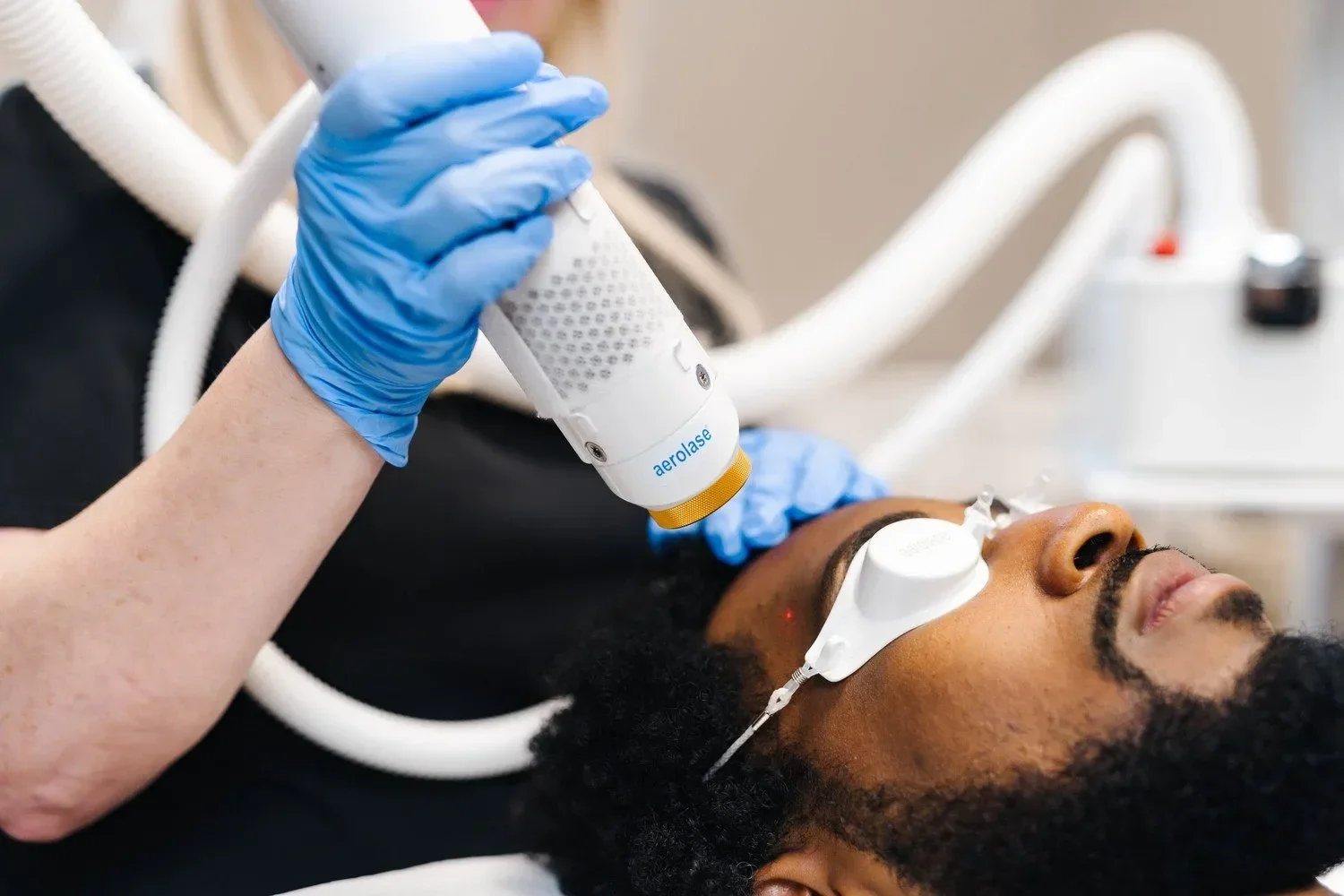
Aerolase (Neo and Era Elite)
Gentle 650 microsecond laser energy that clears, calms and renews skin.
- All Skin Tones
- Neo Elite (1064nm) - Non-Ablative
- Era Elite (2940nm) - Ablative Resurfacing
Explore More Related Treatments
IPL Photofacial
Broad-spectrum light that fades sun damage, age spots and facial redness.
- Fast Clearing
- No Real Downtime
- Brown and Red
Common Questions
Frequently Asked Questions About Laser Skin Resurfacing
How much does laser skin resurfacing cost in Lake Havasu City?
What is NOUVADerm and how is it different from other lasers?
Does laser skin resurfacing hurt?
How many sessions of laser skin resurfacing will I need?
Does laser resurfacing work for melasma?
Is laser skin resurfacing safe for darker skin tones?
What is the downtime after laser skin resurfacing?
How does laser resurfacing compare to IPL?
Can laser resurfacing treat acne scars?
What do I need to do after a resurfacing session?
Schedule Today Your Laser Skin Resurfacing with NOUVADerm Consultation
References
- Oliveira Modena et al., Lasers Med Sci. (2025). Thulium laser (1927 nm) for dermatological conditions: a systematic review. PMID: 41379329.
- Kurmuş et al., J Cosmet Laser Ther. (2019). Efficacy and safety of 1927 nm fractional Thulium fiber laser for the treatment of melasma: a retrospective study of 100 patients. PMID: 31690148.
- Wanitphakdeedecha et al., Lasers Med Sci. (2020). The efficacy in treatment of facial melasma with thulium 1927-nm fractional laser-assisted topical tranexamic acid delivery: a split-face, double-blind, randomized controlled pilot study. PMID: 32506227.
- Li et al., Front Surg. (2023). Prospective study of efficacy and safety of non-ablative 1927 nm fractional thulium fiber laser in Asian skin photoaging. PMID: 36950052.
- Serra et al., J Cosmet Laser Ther. (2018). A randomized, single-blind, study evaluating a 755-nm picosecond pulsed Alexandrite laser vs. a non-ablative 1927-nm fractionated thulium laser for the treatment of facial photopigmentation and aging. PMID: 30019970.