

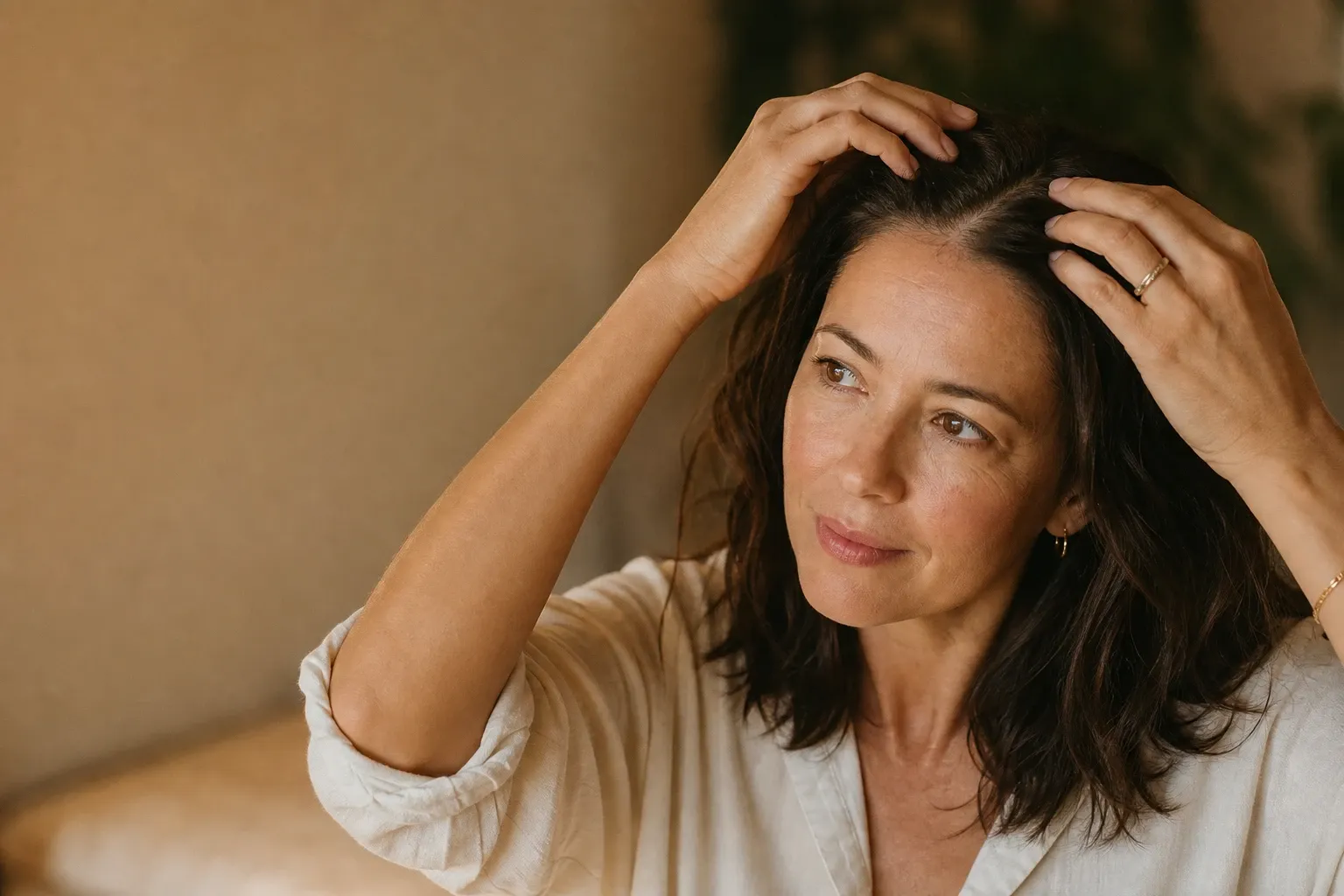
Hair Loss Treatments in Lake Havasu: Why Your Hair May Be Thinning
Thinning hair usually has a traceable cause, from hormones and thyroid to iron, stress and styling. Learn which patterns need lab work before treatment.
Most people notice it in one of two places: the shower drain, or the mirror under overhead light. The ponytail feels lighter in your hand. The part looks a little wider than it did last summer. Hair thinning rarely announces itself, which is why so many patients arrive at Desert Oasis Wellness and Med Spa in Lake Havasu City already six months into quietly worrying about it.
The useful part is this: thinning hair almost always has a reason behind it, and several of the most common reasons are correctable. Below is a plain explanation of what drives hair loss, how to tell everyday shedding from a real change in density, which patterns need a medical evaluation before anyone discusses a cosmetic treatment, and what the realistic options look like once the cause is known.
How Much Shedding Is Actually Normal
Shedding 50 to 100 hairs a day is normal, according to the American Academy of Dermatology. Every follicle runs its own cycle: a long growing phase that lasts years, a brief transition, then a resting phase that ends when the hair releases and a new one pushes up behind it.
At any moment a healthy scalp has roughly one in ten follicles resting, so hair in the brush is expected, not alarming.
Counting strands is a poor test. Density over time is the better one. Two questions tend to sort it out quickly:
- Compared with a year ago, can you see more scalp along your part, particularly under bright or overhead light?
- Does your ponytail feel thinner in your hand, or does it now need an extra wrap of the elastic?
If both answers are yes, something has shifted the cycle. If shedding suddenly tripled over a few weeks, that is a different situation and it deserves attention sooner.
The Common Reasons Hair Thins
Hereditary Pattern Hair Loss
Genetics are behind the majority of long term thinning in both men and women. Follicles inherit a sensitivity to androgens, and each cycle produces a slightly finer, shorter hair until the follicle stops producing a visible strand at all.
Men usually recede at the temples and thin at the crown. Women more often keep the front hairline and watch the part widen across the top of the scalp, which is exactly why it goes unnoticed for years.
Hormonal Change
Estrogen keeps follicles in their growing phase longer. When it drops sharply, as it does after childbirth and again through perimenopause, a large group of follicles moves into resting phase at the same time and sheds together a few months later. Polycystic ovary syndrome raises androgen levels and can thin the top of the scalp while increasing hair elsewhere.
Hormonal thinning is common, it is treatable, and it is the reason our women's guide to hair loss treatment for women starts with diagnosis rather than a product recommendation.
Thyroid Disease
An underactive or overactive thyroid disrupts the growth cycle and produces diffuse thinning across the whole scalp rather than a defined pattern. It rarely arrives alone. Fatigue, temperature intolerance, weight change, dry skin or a change in your cycle alongside shedding is a strong reason to have thyroid labs drawn.
Iron, Protein and Vitamin D
Hair is a metabolically expensive tissue and the body deprioritizes it under scarcity. Low ferritin, the storage form of iron, is one of the most frequent findings in women with unexplained shedding, often driven by heavy periods, restrictive eating or blood loss. Inadequate protein intake and low vitamin D can contribute as well. This matters practically: no in-clinic scalp treatment outperforms simply correcting a deficiency that is starving the follicle.
Stress, Illness and Rapid Weight Loss
A significant physical or emotional stressor can push a large share of follicles into resting phase at once. The shedding does not show up during the stressful event. It appears roughly two to four months afterward, which is why patients often cannot connect the two.
Surgery, a high fever, a serious infection, a crash diet and a period of severe stress all do this. The pattern is heavy, diffuse shedding that typically recovers on its own once the trigger has passed.
Medications
Hair loss is a listed side effect for a long list of common prescriptions, including some blood pressure medications, antidepressants, anticoagulants, retinoids, hormonal contraceptives and cholesterol drugs. Chemotherapy is the most familiar example. If your shedding started a few months after a medication change, bring the bottle to your appointment. Never stop a prescribed medication on your own to test the theory.
Traction and Styling
Tight ponytails, braids, buns, extensions and daily high heat pull and weaken hair at the hairline and temples. Caught early, traction thinning reverses. Left in place for years, those follicles can scar and stop regrowing permanently, which is one of the few forms of hair loss with a genuine deadline attached.
Scalp Health and the Havasu Climate
Follicles sit in skin, and skin behaves differently here. Summer temperatures above 110 degrees, single digit humidity, chlorinated pool water and hard water minerals leave the scalp dry and the hair shaft brittle. Ultraviolet exposure degrades the keratin structure of the strand itself. Desert conditions do not cause pattern hair loss, but they reliably worsen how thin hair looks by adding breakage on top of it.
Shedding and Breakage Are Not the Same Problem
These two get confused constantly, and they call for completely different responses. A quick look at the hair you are losing usually tells you which one you have.
| What you notice | Shedding (follicle level) | Breakage (strand level) |
|---|---|---|
| The lost hair | Full length, with a small white bulb at the root | Short fragments of varying length, no bulb |
| Where it shows | Wider part, thinner ponytail, more visible scalp | Frizzy halo of short hairs, split ends, ragged ends |
| Usual driver | Genetics, hormones, thyroid, iron, stress, medication | Heat styling, color processing, sun, hard water, tight styles |
| What helps | Diagnosis and lab work, then targeted scalp treatment | Gentler routine, heat protection, conditioning, sun cover |
Plenty of people have both at once. Correcting breakage improves how the hair looks within weeks, while true shedding follows the hair cycle and takes months.
When Thinning Needs a Medical Evaluation First
This is the part worth taking seriously. Some hair loss is cosmetic and some is a symptom, and no scalp treatment should be booked before the second possibility has been ruled out. Please see your primary care provider or a dermatologist promptly if you notice any of the following:
- Patchy loss. Distinct round or oval bald spots, on the scalp, in the beard, or in the eyebrows, rather than diffuse thinning.
- Sudden or rapid loss. Shedding that escalated sharply over days or a few weeks.
- Scalp symptoms. Pain, burning, persistent itching, scaling, pustules, sores or unusual odor.
- Smooth, shiny skin where hair used to be. This can indicate scarring alopecia, where follicles are permanently lost and time genuinely matters.
- Hair loss elsewhere on the body. Eyebrows, eyelashes, arms or legs thinning alongside the scalp.
- Other symptoms with the shedding. Fatigue, unexplained weight change, irregular or absent periods, new acne or facial hair growth, or a recent medication change.
- Hair loss in a child. Pediatric hair loss always warrants evaluation.
Autoimmune conditions, scalp infections, thyroid disease, anemia and scarring alopecias all present as hair loss, and all of them need treatment for the condition rather than for the appearance. Layering a cosmetic scalp treatment over an undiagnosed medical cause costs you months you cannot get back.
The Lab Work Worth Asking About
Before starting any regrowth program, it is reasonable to ask your provider about baseline blood work. Which tests apply depends on your history, but the ones most often ordered for unexplained thinning include:
- Ferritin and a complete blood count, to check iron stores and screen for anemia
- TSH with free T4, to assess thyroid function
- Vitamin D
- Androgen levels, when cycles are irregular or there is new acne or facial hair
- A comprehensive metabolic panel, and zinc or B12 where diet or absorption is a concern
Results change the plan. Low ferritin means iron repletion comes first. Abnormal thyroid labs mean the thyroid gets managed before anything else is judged. When the labs are clean and the pattern is hereditary or hormonal, that is the point at which scalp treatment becomes a reasonable next step.
At Desert Oasis Wellness and Med Spa, our medical director reviews labs and medication lists at the consultation for exactly this reason.
What Helps Once You Know the Cause
Treatment splits into two lanes that work best together rather than in competition.
Medical therapy. Topical minoxidil is the only over the counter option the FDA has approved for pattern hair loss in men and women, and it needs consistent daily use for at least six months before its effect can be judged. Prescription options, including finasteride for men and oral therapies used off label under supervision, are managed by your physician or dermatologist.
In-clinic scalp therapy. The non-surgical hair restoration options at Desert Oasis Wellness and Med Spa work on the follicle environment: blood supply, growth factor signaling and how long each follicle stays in its growing phase. PRP hair treatment in Lake Havasu City concentrates the platelets from a small draw of your own blood and places them around thinning follicles, typically as three monthly sessions followed by maintenance.
Scalp microneedling for thinning hair creates controlled micro-channels that trigger a repair response and improve absorption of topical growth serums, usually across four to six monthly visits. Published reviews report improvement in density for many patients with androgenetic alopecia, though results vary by person and no scalp therapy restores a follicle that has already scarred.
Alongside either lane, the basics still matter in this climate: a sulfate free cleanser, weekly conditioning, a wide brimmed hat or a UV protectant spray, lower heat settings, looser styles and enough protein and water. None of that regrows hair on its own. All of it stops you from losing ground while the follicle work happens. We review cost at the consultation, and financing through Cherry and CareCredit is available.
Give It a Full Hair Cycle Before You Judge
The single most common reason people abandon a treatment that was working is impatience, because biology sets the pace here and it cannot be shortened. A realistic sequence looks like this:
- Weeks 1 to 8. Little visible change. Breakage related improvements may show first because they involve the strand, not the follicle.
- Months 3 to 4. The earliest meaningful sign is usually less shedding rather than new growth. Fewer hairs in the drain counts as progress.
- Months 4 to 6. Short new hairs appear along the part and hairline. Photographs under consistent lighting reveal this far better than memory does.
- Months 6 to 12. Density change becomes apparent to you and to other people, and the plan moves into maintenance.
Take a baseline photo of your part before you start, in the same spot and the same light. In six months it will be the most honest evidence you have.
Frequently Asked Questions
Is it normal to see more hair in the drain in summer?
Some seasonal variation in shedding is normal, and summer heat, sun exposure and pool water can add breakage that makes it look worse. The distinction that matters is whether you are losing full length hairs with a small bulb at the root, which points to shedding, or short broken fragments, which points to damage. If heavy shedding lasts more than about six to eight weeks, have it evaluated.
Can stress really cause hair loss?
Yes. A major physical or emotional stressor can push many follicles into resting phase simultaneously, producing heavy diffuse shedding roughly two to four months later. It is usually temporary and recovers once the trigger resolves. Because iron deficiency and thyroid disease can look identical, it is still worth confirming with lab work rather than assuming stress is the whole story.
Do I need to see a doctor before a scalp treatment?
If your thinning is gradual, diffuse and follows a familiar family pattern, a consultation with our team is a reasonable starting point and we will flag anything that needs a physician. If the loss is patchy, sudden, rapid, or comes with scalp pain, scaling, sores or smooth shiny skin, see a physician or dermatologist first. Those patterns can indicate an autoimmune, infectious or scarring condition that requires medical treatment.
How long before I see results from PRP or microneedling?
Plan on three to four months for the first sign, which is usually reduced shedding rather than visible new hair, and four to six months before density changes are noticeable in photographs. Both treatments are delivered as a series and then maintained, because the effect depends on the hair cycle rather than on any single appointment.
Will hair loss treatment work if my thyroid or iron levels are off?
Not as well, and that is the point of testing first. A follicle short on iron or affected by untreated thyroid disease will not respond fully to scalp therapy. Correcting the underlying issue frequently improves the shedding on its own, and it makes any treatment you add afterward far more likely to help.
Is thinning hair in women different from thinning in men?
Usually yes. Men tend to recede at the temples and thin at the crown, while women more often keep the frontal hairline and see the part widen across the top of the scalp. Women also have a wider range of contributing causes, including postpartum and menopausal hormone shifts, thyroid disease and low ferritin, which is why evaluation matters before treatment.
Talk to Someone Who Will Look at the Cause First
If your part is widening, your ponytail feels thinner or the drain has been telling you something for months, you do not have to guess at why. Desert Oasis Wellness and Med Spa in Lake Havasu City reviews your history, medications and labs before recommending anything, then builds a plan around what is actually driving your thinning.
Call (928) 889-0155 or visit us at 2010 Injo Drive, Monday through Friday, 7:00 AM to 4:00 PM, to schedule a hair and scalp consultation.
References
- Dakkak et al., Am Fam Physician. (2024). Hair Loss: Diagnosis and Treatment. PMID: 39283847.
- Müller et al., An Bras Dermatol. (2023). Female-pattern hair loss: therapeutic update. PMID: 37003900.
- Zhang et al., J Cutan Med Surg. (2023). Platelet-Rich Plasma for Androgenetic Alopecia: A Systematic Review and Meta-Analysis of Randomized Controlled Trials. PMID: 37533146.
- Ahmed et al., Arch Dermatol Res. (2025). Evaluating the efficacy and safety of combined microneedling therapy versus topical Minoxidil in androgenetic alopecia: a systematic review and meta-analysis. PMID: 40056230.
- Kaiser et al., Clin Cosmet Investig Dermatol. (2023). Treatment of Androgenetic Alopecia: Current Guidance and Unmet Needs. PMID: 37284568.
- American Academy of Dermatology. (2025). Losing 50 to 100 hairs per day is normal, and excessive shedding is distinct from hair loss.